










Recent CBIZ articles on inventory strategies and aligning insurance coverage to costs discuss the broad financial advantages of capturing and accounting for various costs. In the food and beverage industry (F&B), costs are often accrued in the day-to-day course of operations without being acknowledged, recorded, or applied where they can reduce exposure or affect valuations. When every dash of seasoning and hour of labor adds up incrementally, setting up a system to capture costs requires a degree of scrutiny and attention beyond even the most exacting accounting professional. For that reason, it’s essential that F&B business turn to technology to help recognize expenses that can add up to tax savings, accounting advantages, or insurance reimbursements.
And the advantages of modern tech don’t stop at capturing costs.
Here are the key technological principles and tools that can help automate or simplify your efforts to assess costs accurately, improve efficiency and visibility, and capture data that can translate into meaningful financial benefits.
Know the State of Your Supply Chain
With tariffs, shipping challenges, and other macroeconomic issues affecting the cost of availability of ingredients, it’s important to keep your finger on the pulse of global transportation. Understanding where things stand with respect to your supply chains impacts more than your shipping expectations and costs. It can help you understand spoilage risks, know when to seek out new suppliers, and calculate the value of existing stockpiles as availability changes. Tracking platforms can unlock unique benefits for distributors by helping them assess and align their business practices with evolving market realities.
Integrate Internal Systems
Inventory moves quickly, so the importance of real-time insights cannot be overstated. Similarly, it’s essential that key business data is automatically populated wherever it is relevant. That can help ensure business systems are in lockstep with one another to prevent gaps in information from materially affecting their bottom line. The alternative, manually entering data across systems, is too time consuming and error prone to compete. A fully integrated ERP can tell you the cost of materials, the labor hours that transformed that material, the expenses associated with oils and spices that were added to it, and costs from transportation and insurance. As a result, you get a more accurate picture of costs, profits, margins, and everything in between.
Actionable Reports
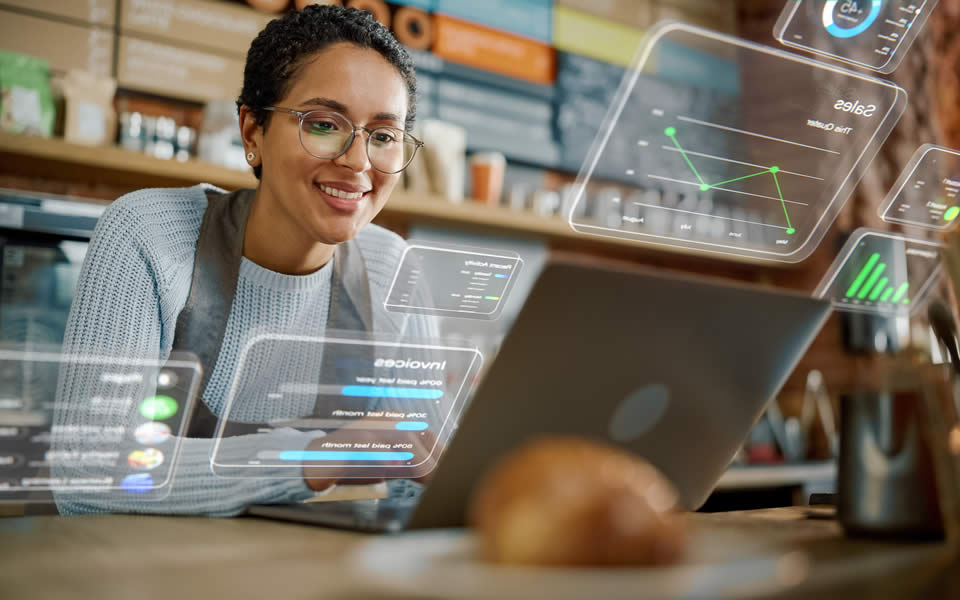
Another key benefit of a modern ERP is the real-time detail it can provide to inform decision makers. Systems that centralize data can also organize and output reports on an ad-hoc basis. That supports the flexibility of leaders who can use them to assess shifting market factors and pivot accordingly. Pointed reports can reveal market and commodity changes and display the information most essential to your business with built-in dashboards providing insights at-a-glance, available anytime.
Instant Readings and Alerts
Internet of Things (IoT) devices enable sensors to deliver data points and alerts instantly. That has obvious benefits in the context of mechanical failures and efforts to prevent loss from spoilage. Similarly, IoT systems can help illuminate stock levels, equipment service status, safety, energy consumption, and much more.
AI
The utility of AI is so broad it can apply in each and every area outlined above – and many others. How AI best serves your business is determined by the sophistication of your AI strategy, readiness, and controls. For some, the AI features now included in third-party tools like ERPs will prove sufficient, others will apply AI toward applications like scheduling, inventory management, and accounting. With AI, it’s most important not to bite off more than you can chew. Start implementing the technology on a case-by-case basis, identifying opportunities, tracking results, and measuring outcomes to validate associated expenses. Once success is proven, turn your attention to scaling what works. Notably, AI is already hard at work in F&B, read about industry-specific AI use cases.
How CBIZ Technology Can Help
For many food and beverage businesses, the challenge is not recognizing that technology can improve operations — it is knowing where to start, how to prioritize investments, and how to make sure new systems create measurable business value. CBIZ Technology helps F&B companies assess current technology debt, identify integration gaps, and build practical modernization roadmaps aligned to cost control, operational efficiency, margin visibility, and risk management.
A technology assessment can help determine whether existing ERP, inventory, accounting, reporting, and supply chain systems are scalable enough to support the business. This includes evaluating how well systems share data, where manual workarounds create risk, and whether leadership has access to timely, accurate information for decision-making. From there, CBIZ can help prioritize initiatives based on business impact, implementation complexity, and return on investment.
CBIZ Technology also supports ERP and inventory system evaluation, vendor selection, integration planning, and implementation readiness. For F&B companies, this may include improving the flow of data between finance, production, warehouse, purchasing, sales, transportation, and insurance-related processes. Better integration helps organizations capture costs more accurately, improve inventory visibility, reduce manual reporting, and strengthen financial controls.
As businesses introduce IoT devices, automated reporting, and AI-enabled tools, cybersecurity and data governance become increasingly important. CBIZ helps organizations establish practical controls around system access, data quality, permissions, connected devices, and responsible AI use. These controls help protect financial, supplier, customer, and operational data while supporting more reliable reporting and decision-making.
Successful modernization also depends on adoption. CBIZ Technology helps organizations align new systems with business processes, update procedures, define roles and responsibilities, train users, and support post-implementation optimization. This change management focus helps ensure technology investments are not only implemented, but used consistently and effectively.
The result is a more connected operating environment that can reduce manual work, improve inventory accuracy, accelerate reporting, strengthen margin visibility, support tax and insurance documentation, and give leadership better insight into the true cost of doing business.
Conclusion
Technology helps capture costs, preserve margins, and act decisively in the face of sudden change. Determining the tech investments that best serve your business starts with an understanding of your current technology debt. Ask yourself, “is my technology serving my business? Is it integrated? Will an upgrade make a material business impact?”
Start by looking at inventory management, enterprise risk, and operational governance. Then, create a roadmap that will take you where you want to be. Create realistic milestones that won’t overtax your team and you’ll be positioned for success in your modernization efforts.
Need help assessing your business’ technology debt or designing a roadmap? Contact a member of the CBIZ F&B team and upgrade your business technology.
Frequently Asked Questions
Modern food and beverage technology solutions—including inventory management software, cloud ERP systems, and real-time data integration platforms—enable F&B businesses to capture hidden operational costs that often go unrecorded in day-to-day operations.
A fully integrated ERP system for food and beverage centralizes financials, supply chain data, and production inputs, delivering real-time inventory tracking, cost accounting, and profitability insights.
Supply chain visibility tools and IoT-enabled food safety systems are essential for managing today’s volatile F&B environment, where ingredient availability, tariffs, and logistics disruptions directly impact profitability.
Advanced IoT sensors in food and beverage operations provide instant readings on stock levels, spoilage risk, energy consumption, and equipment performance, helping operators prevent loss and maintain compliance.
Artificial intelligence in food and beverage is rapidly becoming a core capability across inventory optimization, demand forecasting, scheduling, and financial analytics. When integrated into modern ERP platforms and business intelligence dashboards, AI enhances the accuracy and speed of decision-making.
With real-time reporting tools, automated dashboards, and predictive analytics, F&B leaders can monitor commodity price fluctuations, cost trends, and operational KPIs as they happen. This enables faster pivots, improved forecast accuracy, and stronger enterprise risk management.
© Copyright CBIZ, Inc. All rights reserved. Use of the material contained herein without the express written consent of the firms is prohibited by law. This publication is distributed with the understanding that CBIZ is not rendering legal, accounting or other professional advice. The reader is advised to contact a tax professional prior to taking any action based upon this information. CBIZ assumes no liability whatsoever in connection with the use of this information and assumes no obligation to inform the reader of any changes in tax laws or other factors that could affect the information contained herein. Material contained in this publication is informational and promotional in nature and not intended to be specific financial, tax or consulting advice. Readers are advised to seek professional consultation regarding circumstances affecting their organization.
“CBIZ” is the brand name under which CBIZ CPAs P.C. and CBIZ, Inc. and its subsidiaries, including CBIZ Advisors, LLC, provide professional services. CBIZ CPAs P.C. and CBIZ, Inc. (and its subsidiaries) practice as an alternative practice structure in accordance with the AICPA Code of Professional Conduct and applicable law, regulations, and professional standards. CBIZ CPAs P.C. is a licensed independent CPA firm that provides attest services to its clients. CBIZ, Inc. and its subsidiary entities provide tax, advisory, and consulting services to their clients. CBIZ, Inc. and its subsidiary entities are not licensed CPA firms and, therefore, cannot provide attest services.