












Private equity (PE) firms thrive on value creation, operational improvements, growth acceleration, and successful exits within compressed hold periods. Yet portfolio companies operate in an increasingly volatile environment where a single unmanaged risk can erase years of progress. Effective insurance and risk management are no longer back-office functions; they are strategic levers that directly influence EBITDA, cost of capital, exit multiples, and ultimately enterprise value (EV).
The Biggest Concerns: Risks That Erode Enterprise Value
Recent surveys and market analyses highlight a consistent set of threats that disproportionately affect PE-backed companies:
Cybersecurity and Third-Party Cyber Risk
Cyber threats rank among the top risks for PE firms and their portfolios in 2025. A single ransomware attack or supply-chain breach (e.g., via a compromised vendor) can halt operations, trigger regulatory fines, erode customer trust, and generate massive remediation costs, often $4 million to $10 million per incident, plus reputational damage that compresses exit multiples by one to two turns.
Directors & Officers (D&O) and Management Liability
PE sponsors appoint board members who face heightened exposure from conflicts of interest, financial distress claims, regulatory scrutiny (SEC, antitrust), and shareholder litigation. Portfolio-company bankruptcies have surged since the 2022 rate hikes, prompting insurers to add insolvency exclusions or “priority of payments” clauses that leave sponsors and directors unprotected.
Supply-Chain and Macroeconomic Disruptions
Tariffs, geopolitical tensions, inflation, and natural catastrophes disrupt just-in-time models. A single critical vendor failure can cascade across multiple portfolio companies sharing the same suppliers.
Operational and Physical Asset Risks
Property damage, business interruption, product liability, and employment practices gaps frequently surface in post-acquisition audits, especially in lower-middle-market companies that grew rapidly via add-ons without updating programs.
Regulatory, ESG, and Privacy Compliance
Evolving data-privacy laws (CCPA, GDPR, state-level), ESG reporting mandates, and labor regulations create new exposure vectors.
These risks do not just threaten downside protection; they actively penalize valuation. Buyers at exit apply higher discount rates and lower multiples to companies with immature risk programs, while optimized programs can add 0.5–1.5× to EV/EBITDA.
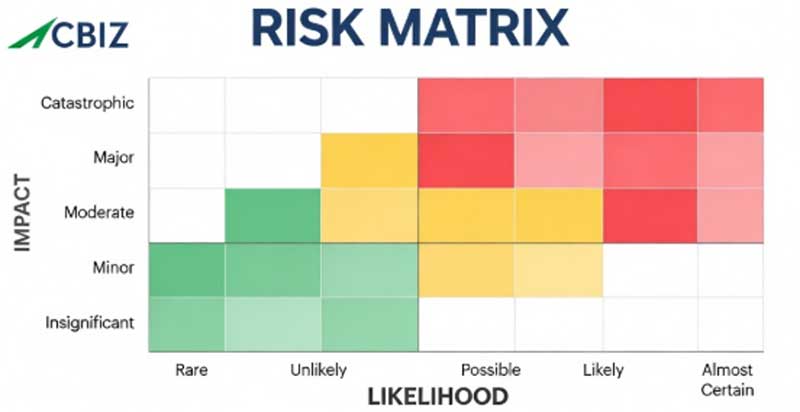
A risk matrix (above) highlights how PE teams prioritize and visualize threats.
Solutions That Most Impact Enterprise Value
Forward-looking PE firms treat insurance and risk management as a value-creation platform rather than a cost center. The highest-ROI initiatives include:
Instead of letting each portfolio company negotiate independently, leading sponsors implement portfolio-wide master programs (e.g., executive risk, cyber, property/casualty).
Benefits:
- 10–30% lower premiums through aggregated buying power
- Standardized “best-in-class” policy language
- Dedicated limits/retentions that prevent one company’s claim from eroding coverage for others
- Streamlined M&A integration and exit due diligence
- Centralized data analytics for trend identification and proactive mitigation
Firms using portfolio programs report faster add-on integrations, lower administrative burden, and stronger positioning in sales processes.
Robust Enterprise Risk Management (ERM) Frameworks
Mature enterprise risk management (ERM) programs, complete with risk registers, heat maps, board-level reporting, and scenario stress testing, directly support higher exit multiples. PE owners increasingly require portfolio companies to implement ERM within 12–18 months of acquisition, focusing on:
- Cyber maturity assessments and incident response plans
- Third-party risk management (TPRM) programs with contractual insurance requirements
- Crisis management and business-continuity plans tested annually
Proactive Insurance Due Diligence (IDD) and Post-Close Optimization
Pre-close IDD conducted by independent PE-specialist brokers identifies hidden gaps (high deductibles, geographic exclusions, underinsured limits, stagnant programs) that would otherwise require unplanned capital post-acquisition. Post-close, sponsors renegotiate terms, implement risk controls that reduce premiums, and often migrate to portfolio programs.
Reducing Insurance Costs to Enhance Enterprise Value
During due diligence, CBIZ identified an acquisition target that was significantly overspending on insurance premiums. Post-close, CBIZ took the program to market and reduced the annual premium from $1.05 million to $710,000, a 32% reduction and approximately $340,000 in immediate annual savings that enhanced enterprise value.
Cyber Resilience and Alternative Risk Transfer
- Mandatory annual cyber due diligence on high-exposure portfolio companies
- Cyber insurance with strong pre- and post-breach services, including incident response, ransom negotiation and forensic support
- Captives or parametric solutions for predictable risks (e.g., cyber business interruption, supply-chain events)
Sponsor-Level Protections
Careful coordination of fund-level Side-A D&O, Outside Directorship Liability, and portfolio-company policies prevents coverage gaps when PE professionals wear multiple hats.
Quantifiable Impact on Enterprise Value
- EBITDA uplift: Insurance cost savings of 15–25% on $5 million to $10 million in annual spend add 0.5–0% to EBITDA margins.
- Multiple expansion: Companies with mature ERM and robust insurance programs command 0.5–1.5× higher exit multiples (empirical observation across middle-market deals).
- Cost of capital: Lower perceived risk reduces Weighted Average Cost of Capital (WACC) and improves debt capacity.
- Exit certainty: Clean, centralized risk documentation shortens due diligence timelines and reduces buyer price concessions.
Conclusion: From Cost Center to Value Driver
In today’s environment, with elevated interest rates, persistent cyber threats, supply chain fragility and heightened regulatory scrutiny, insurance and risk management are competitive advantages. The most sophisticated PE firms have moved beyond compliance to treat risk programs as strategic assets that protect downside, accelerate operational improvements, and maximize exit value.
Portfolio companies that embrace this mindset do not merely survive; they command premium valuations and deliver superior returns to limited partners. The message is clear: in private equity, the best defense is a proactive, enterprise-wide offense.
By integrating insurance strategy with value-creation plans from day one, sponsors can turn risk management into one of the most powerful and underutilized levers for outsized returns.
Connect with CBIZ to explore how a proactive insurance and risk management strategy can protect and enhance enterprise value across your portfolio.
© Copyright CBIZ, Inc. All rights reserved. Use of the material contained herein without the express written consent of the firms is prohibited by law. This publication is distributed with the understanding that CBIZ is not rendering legal, accounting or other professional advice. The reader is advised to contact a tax professional prior to taking any action based upon this information. CBIZ assumes no liability whatsoever in connection with the use of this information and assumes no obligation to inform the reader of any changes in tax laws or other factors that could affect the information contained herein. Material contained in this publication is informational and promotional in nature and not intended to be specific financial, tax or consulting advice. Readers are advised to seek professional consultation regarding circumstances affecting their organization.
“CBIZ” is the brand name under which CBIZ CPAs P.C. and CBIZ, Inc. and its subsidiaries, including CBIZ Advisors, LLC, provide professional services. CBIZ CPAs P.C. and CBIZ, Inc. (and its subsidiaries) practice as an alternative practice structure in accordance with the AICPA Code of Professional Conduct and applicable law, regulations, and professional standards. CBIZ CPAs P.C. is a licensed independent CPA firm that provides attest services to its clients. CBIZ, Inc. and its subsidiary entities provide tax, advisory, and consulting services to their clients. CBIZ, Inc. and its subsidiary entities are not licensed CPA firms and, therefore, cannot provide attest services.