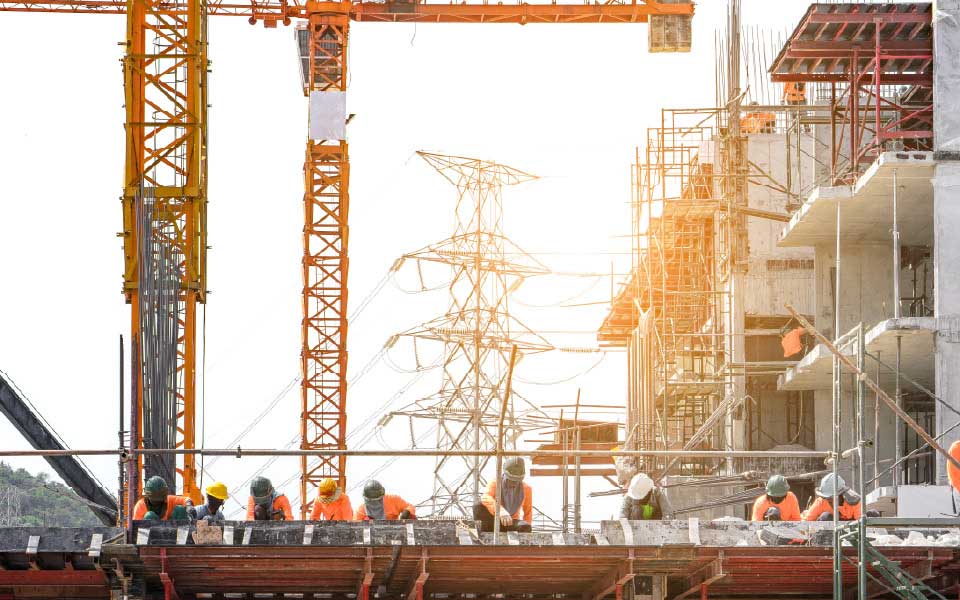












Just as the global economy has been remarkably resilient over the past year, the construction industry has enjoyed fairly robust growth overall.
This year’s survey once again showed that most of the top concerns among construction leaders relate to meeting demand. One might expect some slowdowns caused by headline grabbing issues and events like tariffs, conflict in the Middle East, or immigration crackdowns, and indeed there were signs of operational uncertainty. Still, respondent concerns were typically tied to keeping projects on track amid the ever-present shortage of skilled workers.
Otherwise, respondents indicate that they have strong backlogs, stable demand and good bidding conditions. The main constraint is the availability of workers and sometimes supplies limiting contractors’ ability to hit budgets and schedules.
Powerful Growth Drivers
The tailwinds boosting the construction market are diverse and likely to continue into the coming year. This translated into strong survey results around hard data like personal guarantees, wage increases, and many respondents even saying they were too busy. Some key drivers of growth include:
- Extensive projects related to the explosion of data centers and the related need for more energy; and
- Public projects fueled by the Infrastructure Investment and Jobs Act (IIJA).
Challenges Remain
Despite overall good news, some construction sectors are facing difficulty. Just as we see in the overall economy, some contractors are winning in certain sectors while others are struggling. The tale of two economies, where high-income earners are spending more and driving growth as lower income professionals struggle, is manifesting in construction as well.
- Residential construction is weak due to high interest rates, economic uncertainty, and above-average inflation. Simply put, too few young people can afford home ownership, and it has caused housing construction to plummet to its lowest levels in 15 years.
- Retail construction is arguably faring worse, with a year-over-year decline of more than 8%.
- Manufacturing construction, having seen a boom built on the CHIPS Act after COVID, is now more than 20% below its peak in 2024.
Operational Efficiency Is Key
Whether you’re working to counter a lack of skilled labor, trying to maintain profit margins as input costs constantly rise, or just striving to run your business more effectively, becoming more efficient is critical.
Just 19% of survey respondents say they are using artificial intelligence in any way (21% said they can’t use it). This highlights a big disconnect and common missed opportunity within the industry. Understanding how AI can help your business is vital in an increasingly competitive era where business as usual may no longer cut it.
While AI can’t lay bricks, it can help you source more affordable bricks, get them to the worksite at optimal times, and ensure the right skilled labor is there to put them in place. Of course that’s an oversimplification, but you may be surprised at just how well AI can help coordinate tasks, optimize staffing, identify saving opportunities, and simplify complex jobs. CBIZ Managing Director Dave Mustin covers some of the exciting potential of AI for construction companies in his article within this report.
Looking Ahead
As we welcome a new Chair of the Federal Reserve, rates are likely to remain high due to strong inflationary pressure. The Fed has a mandate to work toward 2% inflation and the surge in oil prices, along with other factors, has taken lowering rates off the table. Tariffs remain a wild card as they have been throughout the tempestuous Trump administration. Rising material prices, high rates, and ongoing uncertainty make it downright surprising how resilient projects have been in continuing to move forward but so far, they have.
Construction leaders, however, are understandably worried about the future. The IIJA authorization expires this fiscal year and the aforementioned pressures on some construction sectors remain. Meanwhile, the nation faces some daunting fiscal issues. Congress cannot smoothly pass a budget, the federal deficit just exceeded the national GDP, and long-term uncertainties abound.
The 2020s will likely be looked at in a way the 1920s were – a go-go time of incredible growth. One worries that the 2030s could look like the 1930s. The bond market and other fundamentals that are upstream of the construction industry will likely look very different in the next 10-15 years, making personal guarantees even more stressful. Similarly, the political landscape will likely change as young people who are less prosperous than prior generations become disaffected by capitalism and free enterprise. Regardless of your political persuasion, the mathematical reality underlying our economic circumstances will catch up to the nation soon. The U.S. is vastly outspending its means and at some point, the growth in spending must end. When it does, one fears that construction will be among the hardest hit.
If that possibility is leaving you anxious, take control by planning for any eventuality. Check out CBIZ Managing Director Roger Gingerich’s article on setting up your business for its next chapter. The sales values of construction companies are currently high, creating excellent opportunities for lucrative transactions.
No matter what your next steps are, be sure to act now rather than wait until your options are limited. Opportunities abound for construction companies running leaner, more effectively, and especially those creating contingencies for whatever the future may hold.
© Copyright CBIZ, Inc. All rights reserved. Use of the material contained herein without the express written consent of the firms is prohibited by law. This publication is distributed with the understanding that CBIZ is not rendering legal, accounting or other professional advice. The reader is advised to contact a tax professional prior to taking any action based upon this information. CBIZ assumes no liability whatsoever in connection with the use of this information and assumes no obligation to inform the reader of any changes in tax laws or other factors that could affect the information contained herein. Material contained in this publication is informational and promotional in nature and not intended to be specific financial, tax or consulting advice. Readers are advised to seek professional consultation regarding circumstances affecting their organization.
“CBIZ” is the brand name under which CBIZ CPAs P.C. and CBIZ, Inc. and its subsidiaries, including CBIZ Advisors, LLC, provide professional services. CBIZ CPAs P.C. and CBIZ, Inc. (and its subsidiaries) practice as an alternative practice structure in accordance with the AICPA Code of Professional Conduct and applicable law, regulations, and professional standards. CBIZ CPAs P.C. is a licensed independent CPA firm that provides attest services to its clients. CBIZ, Inc. and its subsidiary entities provide tax, advisory, and consulting services to their clients. CBIZ, Inc. and its subsidiary entities are not licensed CPA firms and, therefore, cannot provide attest services.